For years, I walked right past beta-glucan on ingredient lists without a second thought.
Hyaluronic acid was the hydrating ingredient everyone discussed, so that’s what I focused on. Beta-glucan sounded vaguely scientific and unexciting, definitely not something I needed to research.
Then my skin hit a rough patch.
Everything felt off. The air was dry, I was stressed (two kids, work deadlines, the usual chaos), and my reliable hyaluronic acid routine just wasn’t cutting it anymore. My skin looked dull and felt tight no matter how many layers I applied. I started digging into alternatives and kept stumbling across beta-glucan in K-beauty forums. People with sensitive, dehydrated skin were calling it a game-changer.
Within two weeks of adding a beta-glucan serum, I understood the fuss. My skin felt calmer, more resilient, hydrated in a way that actually lasted. That’s when I realized beta-glucan deserves way more attention than it gets.
What is beta-glucan?
Beta-glucan is a polysaccharide, essentially a complex sugar molecule made up of linked glucose units. Understanding what it is helps explain why it works so well.
You’ll find beta-glucan naturally occurring in several sources:
Oats are probably most familiar. If you’ve noticed oatmeal’s slightly slimy texture, that’s beta-glucan at work. Oat beta-glucan has been used for skin soothing for centuries, there’s a reason oatmeal baths are recommended for irritated skin.
Mushrooms like shiitake, reishi, and maitake contain beta-glucan with slightly different structural properties. Mushroom-derived beta-glucan has been studied extensively for immune-supporting benefits that translate to skincare.
Yeast (particularly Saccharomyces cerevisiae) is another common source. Yeast-derived beta-glucan is popular in Korean skincare because it absorbs well and has strong skin-soothing properties.
The source matters because molecular structure varies depending on origin. Oat-derived and yeast-derived beta-glucans tend to be most researched for skincare, with yeast-derived versions often considered most effective for skin penetration.
When you see beta-glucan on Korean skincare ingredient lists, it’s usually derived from oats or yeast. Some products specify the source, while others list it generically.
How beta-glucan hydrates your skin
Beta-glucan is a humectant, meaning it attracts water and binds it to your skin, similar to hyaluronic acid. But the delivery method differs, and that difference matters.
Beta-glucan molecules are larger than hyaluronic acid molecules. This means beta-glucan doesn’t penetrate as deeply. Instead, it forms a thin, flexible film on the surface that holds moisture against your skin and reduces transepidermal water loss, water evaporating throughout the day.
Think of it this way: hyaluronic acid excels at pulling water in but needs help keeping it there. Beta-glucan acts like a protective blanket, creating a barrier that locks moisture in place.
This film-forming quality explains why beta-glucan works so well in dry environments. Unlike HA, which relies on pulling moisture from surrounding air, beta-glucan focuses on preventing existing moisture from escaping. When humidity is low, that prevention strategy becomes invaluable.
I notice this most during California’s dry season and in air-conditioned spaces. With hyaluronic acid alone, I’d feel tight by afternoon. With beta-glucan, that midday dehydration just doesn’t happen.
The hydration feels different texturally too. HA gives immediate plump, bouncy sensation. Beta-glucan hydration is subtler, less dramatic but more sustained.
The soothing benefits: more than just hydration
What truly sets beta-glucan apart is what it does beyond hydration. This ingredient genuinely calms reactive skin in ways HA doesn’t.
Anti-inflammatory properties. Beta-glucan reduces inflammation and calms irritated skin. If you deal with redness, sensitivity, or skin that overreacts to products or environmental changes, beta-glucan helps take the edge off. My skin looks less pink and blotchy since incorporating it.
Skin barrier support. A healthy barrier keeps moisture in and irritants out. When your barrier is compromised, from over-exfoliation, harsh products, or stress, skin becomes reactive and loses hydration faster. Beta-glucan supports barrier function, helping skin protect itself. If you’re working on repairing a damaged barrier, beta-glucan deserves consideration.
Wound healing support. Research suggests beta-glucan helps skin heal faster from minor damage. For small blemishes, post-procedure recovery, or irritated skin, it may speed healing.
Antioxidant activity. Beta-glucan offers protection against environmental stressors like pollution. It’s not a sunscreen replacement, but the antioxidant support adds another defensive layer.
These soothing benefits explain why Korean skincare embraced beta-glucan enthusiastically. K-beauty philosophy centers on gentle, nourishing care rather than harsh treatments, and beta-glucan fits perfectly.
Who should try beta-glucan
Beta-glucan works for most skin types, but some people see more dramatic benefits.
Sensitive skin is where beta-glucan shines. If your skin reacts to everything, gets red easily, or feels irritated constantly, beta-glucan’s soothing properties make noticeable difference.
Dry and dehydrated skin benefits from beta-glucan’s moisture-locking abilities. If skin feels tight, looks dull, or shows fine dehydration lines, beta-glucan helps, especially when layered with other hydrating ingredients.
People in dry climates often find beta-glucan more effective than hyaluronic acid. If you live somewhere with low humidity, work in air-conditioned environments, or travel frequently, beta-glucan’s barrier-forming properties help skin hold moisture regardless of conditions.
Anyone dealing with redness or inflammation benefits from beta-glucan’s calming effects. It won’t cure rosacea or severe conditions, please see a dermatologist for those, but for general redness, it helps.
Oily skin can use beta-glucan too. The ingredient itself doesn’t clog pores or add oiliness. Look for lightweight gel formulas if concerned about heaviness.
Those with oat allergies should choose yeast-derived beta-glucan, and anyone reacting to yeast-based ingredients should patch test carefully.
How to use beta-glucan in your routine
Adding beta-glucan is straightforward, and it plays well with most ingredients.
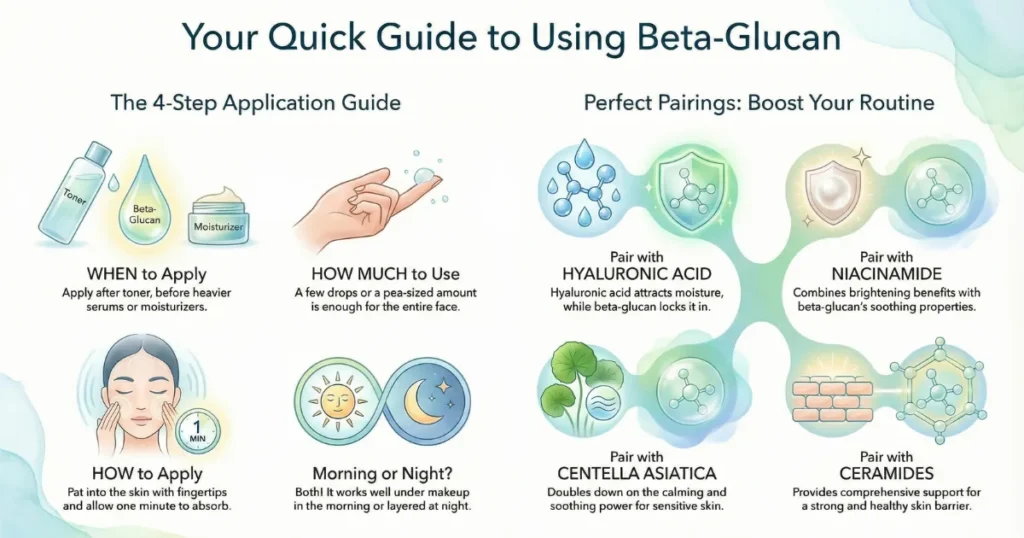
When to apply: After toner, before heavier serums or moisturizers. If using multiple serums, apply thinnest to thickest. Most beta-glucan serums fall in the middle, thicker than hyaluronic acid but lighter than oils.
How much: A few drops or pea-sized amount covers your whole face. Beta-glucan spreads easily.
Application technique: Pat into skin using fingertips rather than rubbing. Give it a minute to absorb before layering. That slight tackiness is normal, it indicates the protective film forming.
Morning or night? Both work. I prefer beta-glucan at night, layering it with richer products. It works perfectly in mornings too, layering nicely under makeup once absorbed.
Combining with other ingredients: Beta-glucan pairs beautifully with hyaluronic acid (HA attracts moisture, beta-glucan locks it in), niacinamide (brightening plus soothing), centella asiatica (double the calming power), and ceramides (barrier support from multiple angles).
What to look for on labels
When shopping, ingredient lists tell you a lot.
Common names: Beta-glucan, oat beta-glucan, saccharomyces/yeast beta-glucan, Avena sativa (oat) extract, saccharomyces ferment.
Concentration matters. Beta-glucan is effective even at low concentrations, some research shows benefits at just 0.1%. Higher concentrations generally mean more noticeable results. Since brands rarely disclose exact percentages, judge by ingredient list placement. The higher beta-glucan appears, the more the product contains.
Giving beta-glucan the attention it deserves
I wish I’d discovered beta-glucan sooner. For years, I assumed hyaluronic acid was the only hydrating ingredient worth caring about because it constantly had the spotlight. Beta-glucan sat quietly on ingredient lists, doing its job without demanding attention.
But for my skin: combination, occasionally sensitive, living in a dry climate, beta-glucan turned out to be exactly what I needed. The sustained hydration, the calming effects, the way my skin just feels more comfortable and resilient.
If your current hydrating ingredients aren’t quite working, or if you’re dealing with sensitivity alongside dehydration, beta-glucan is worth trying. It might not have hyaluronic acid’s name recognition, but sometimes the best ingredients are the ones flying under the radar.